
Glass Kilnforming and Casting Classes
Our glass kilnforming and casting classes in Minneapolis, MN, are a wonderful introduction to the world of manipulating glass in an electric kiln. Through this range of classes, you can learn fusing and slumping, mold-making and pressing, wax casting, and other exciting techniques. Many of our students have utilized the skills learned in these classes to make their own household decorations or products to sell online and in person. The majority of our kilnforming classes in Minneapolis, MN, are beginner-friendly, and any classes with prerequisites will state so in their respective descriptions. So, what are you waiting for? View our glass classes below and sign up today! Registration is available to students 14 years old and up.
Foci MGCA offers a full-tuition scholarship open to BIPOC and a need based half-tuition scholarship open to anyone with financial need. Find out more about our scholarship opportunities here.
Masks are not required but strongly recommended. Disposable masks are available upon arrival. View our COVID-19 Policy here.
-
"Kilnworking or kilnforming is the process of fusing or shaping glass (usually in or over a mold) by heating it in a kiln. A 'kiln' is an oven used to process a substance by burning, drying, or heating. In contemporary glassworking, kilns are used to fuse enamel and for kiln-forming processes such as slumping" (Corning Museum of Glass).
At Foci MCGA, we offer a variety of classes to begin exploring kilnforming through.
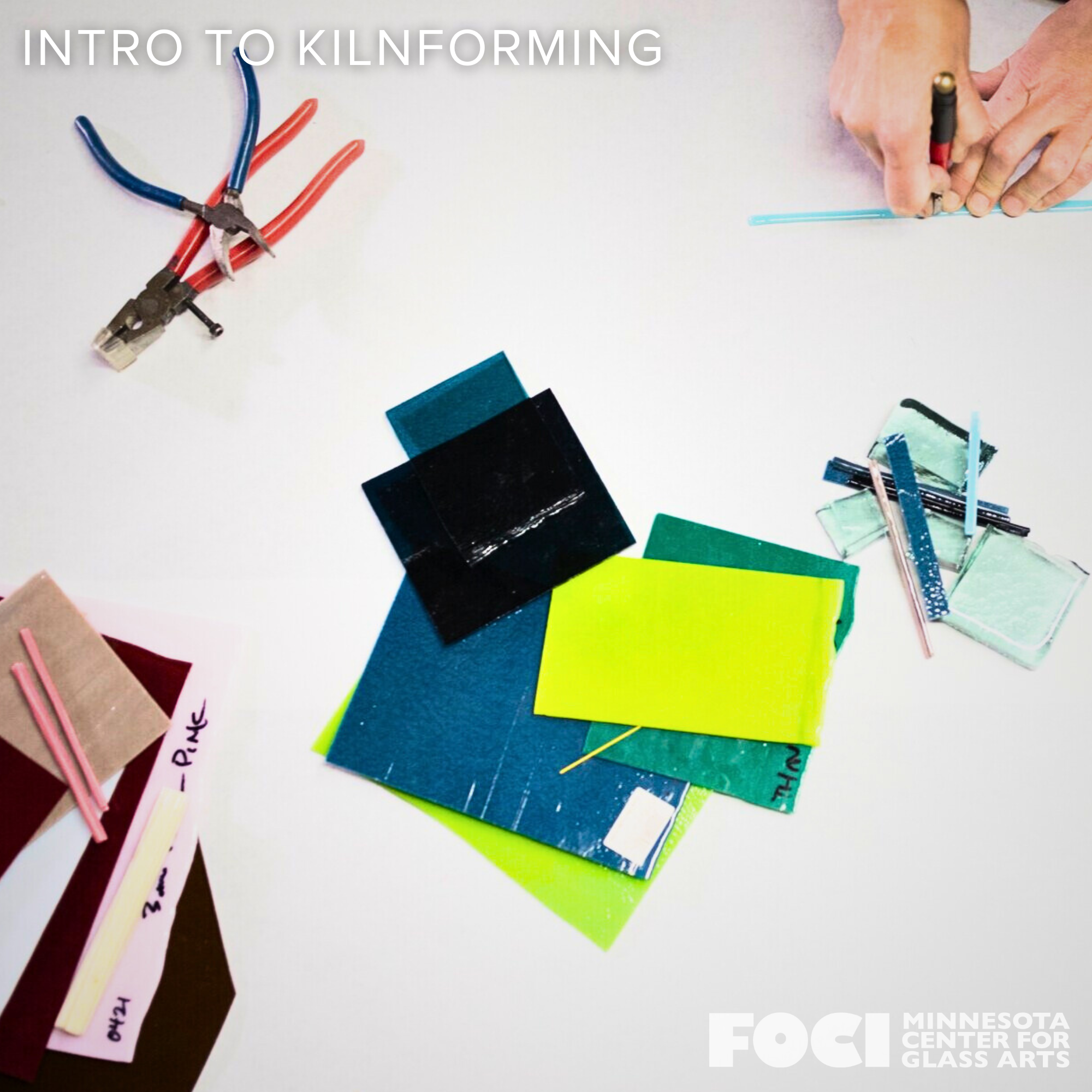
Intro to Kilnforming and Intermediate Kilnforming focus on fusing and slumping glass.
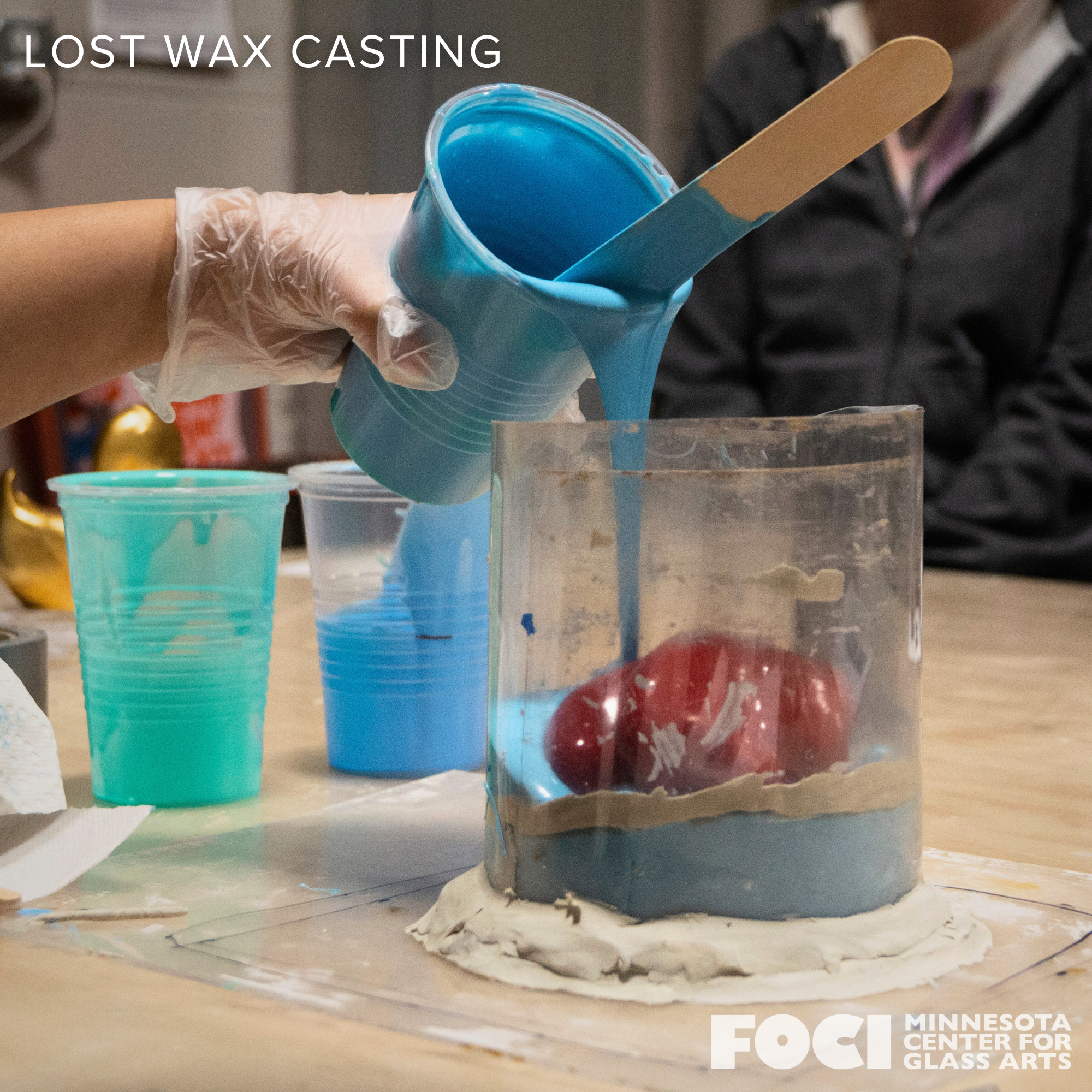
We also offer Open Faced Casting and Lost Wax Casting, which delve into moldmaking, kilncasting, and coldworking.
-
Glassblowing is the art of shaping a mass of molten glass that has been softened by heat by blowing air into it through a metal tube/pipe. The molten glass is collected out of a hot furnace and then manipulated using hand tools, heat, and gravity.
While some elements of heat and gravity may come into play with kilnforming processes, for the most part you will be handling sheets of glass, then manipulating it into desired forms through cutting or fusing. This approach has the ability to be a more accessible and affordable alternative to glassblowing.
These glass processes all differ from one another, but can be combined in a myriad of ways to create a multitude of wonderful effects!



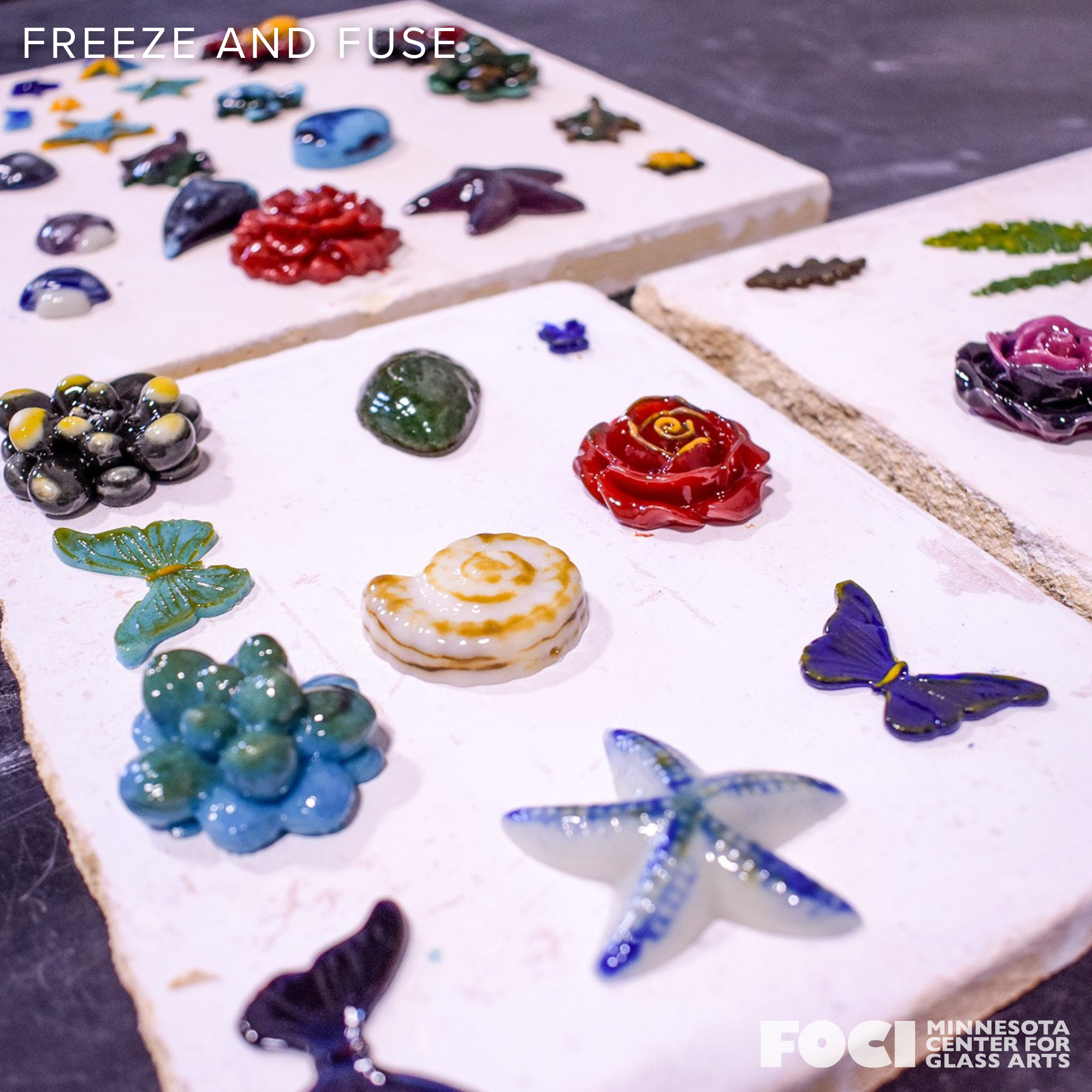
All Recurring Glass Kilnforming & Casting Classes Offered:
Intensive Core Classes
Intro to Kilnforming, 6-week course. Offered annually. No experience required.
Intermediate Kilnforming, 6-week course. Offered semiannually (Prerequisite: Intro to Kilnforming).
Open Faced Casting, 4-week course. Offered semiannually. No experience required.
Lost Wax Casting, 6-week course. Offered annually. No experience required.
Visiting Artist Workshops, 5 day intensive class. Offered annually. (prerequisite is dependent on curriculum).
Other Programming
Kilnforming Open Studio, one day session, offered seasonally (Prerequisite: Intro to Kilnforming)
We strive to offer new and exciting classes and workshop each year. If you are interested in a specific technique, please inquire at contact@mnglassart.org.
Class Release Schedule:
Q1 Winter Core Classes: held January-March. Enrollment opens by November 1st. Scholarships for this quarter are due December 1st - apply here!
Q2 Spring Core Classes: held April-June. Enrollment opens by February 1st. Scholarships for this quarter are due March 1st - apply here!
Q3 Summer Core Classes: held July-September. Enrollment opens by May 1st. Scholarships for this quarter are due June 1st - apply here!
Q4 Fall Core Classes: held October-December. Enrollment opens by August 1st. Scholarships for this quarter are due September 1st - apply here!
Scholarship Opportunities: Foci MGCA offers a full-tuition scholarship open to BIPOC and a need based half-tuition scholarship open to anyone with financial need. Find out more about our scholarship opportunities here!
Looking for our One-Day Glass Art Experiences instead? Check out our current Glass Discovery offerings here.